
Introduction

Buying a home with less-than-perfect credit feels like navigating a maze blindfolded. You've heard conflicting advice about minimum scores, been told "no" without explanation, or wondered if homeownership is even possible when your credit history isn't spotless. The truth is simpler than the rumors: yes, you can buy a house with bad credit — but the path requires understanding how lenders evaluate risk and which programs align with your current financial position.
Credit scores don't tell the whole story. Good credit reflects a history of paying bills on time and borrowing within your means, while bad credit typically shows late payments or an inability to repay borrowed amounts. What matters to mortgage lenders is the pattern behind the number: they're assessing whether you're likely to make payments consistently over decades, not just whether you crossed an arbitrary threshold last month.
There is no single minimum credit score accepted by all mortgage lenders — requirements vary by lender and loan type, and other factors such as income and debt also influence approval decisions. One lender might approve a borrower at 580 while another sets the floor at 640 for the same loan program. This variance creates opportunity: the right lender match can turn a "no" into a "yes" without you changing a single thing about your credit file.
The difference between approval and rejection often comes down to preparation. Knowing what's in your credit report, understanding which loan programs accept lower scores, and presenting a complete financial picture gives you control over a process that otherwise feels arbitrary. This guide walks through the concrete steps that turn bad credit from a barrier into a solvable problem, with specific actions you can take before, during, and after the application process.
For context on how credit requirements differ across housing decisions, see What Credit Score Do You Need to Rent an Apartment? — the threshold for renting is often lower than buying, but understanding both helps you plan your housing timeline.
Problem Statement
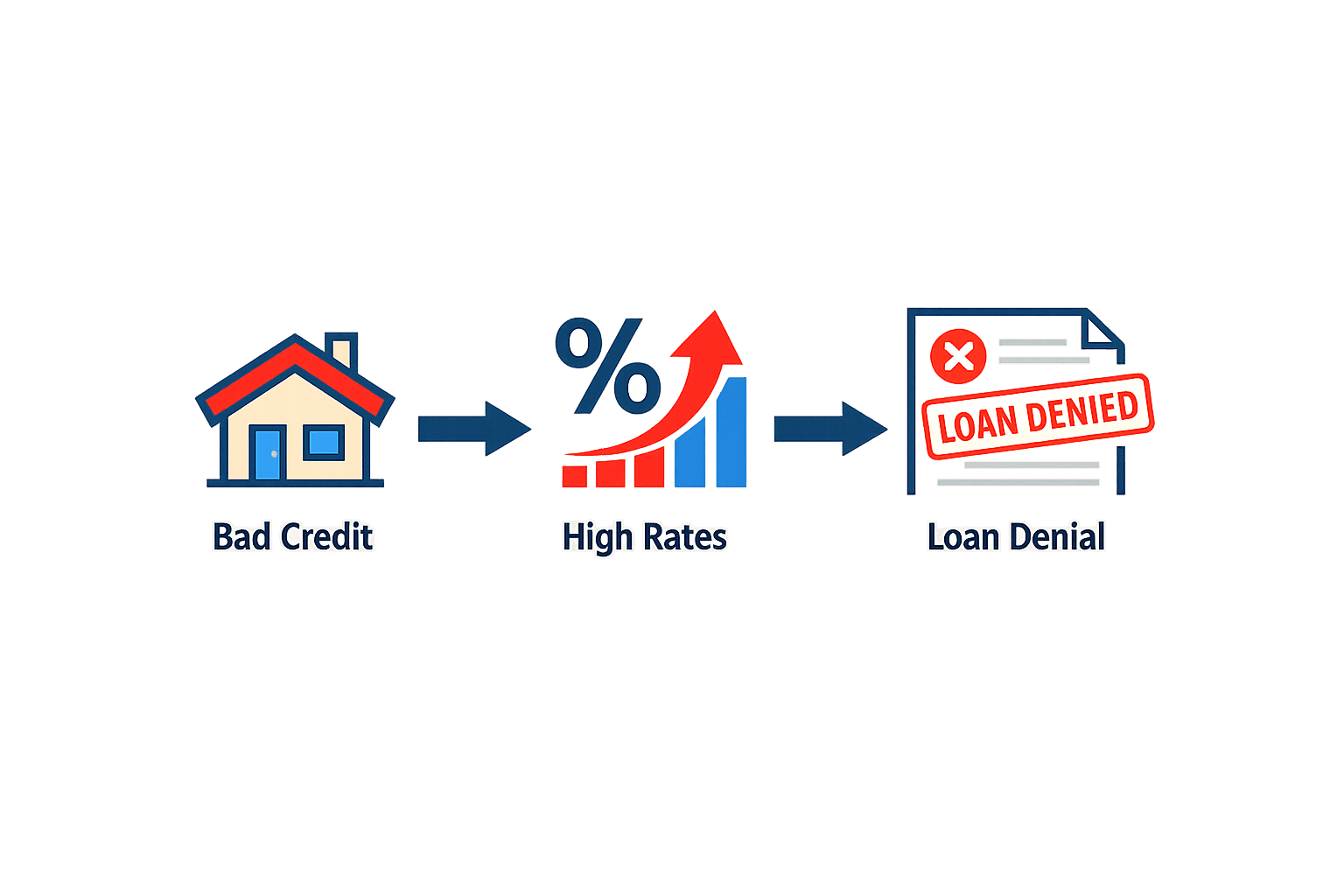
Buying a house with bad credit presents real obstacles that can derail homeownership plans before they begin. Lenders rely heavily on credit scores to assess risk, and a lower score signals to them that you may be more likely to default on a loan. This perception translates into tangible financial consequences that affect both your ability to secure financing and the cost of that financing over the life of the loan.
Higher Interest Rates and Loan Costs
When lenders do approve mortgages for borrowers with bad credit, they typically offset their perceived risk by charging higher interest rates. Many lenders approve mortgages across a range of credit scores, but higher scores generally improve approval chances and help borrowers qualify for better interest rates and terms. The difference between a rate offered to someone with excellent credit versus bad credit can add tens of thousands of dollars to the total cost of a home over a 30-year mortgage.
Beyond interest rates, borrowers with bad credit often face additional hurdles. Lenders may require larger down payments to reduce their exposure, sometimes asking for 10-20% down instead of the 3-5% available to borrowers with stronger credit. This requirement can delay homeownership for years while you save the additional funds. Some loan programs that offer favorable terms to first-time buyers or low-income households may also have minimum credit score thresholds that exclude applicants with bad credit entirely.
Loan Denial and Limited Options
The most significant challenge is outright denial. While there is no single minimum credit score accepted by all mortgage lenders, and requirements vary by lender and loan type, many conventional loan programs effectively shut out borrowers below certain score thresholds. When your credit score falls into the "bad" range, your pool of willing lenders shrinks dramatically, and those who remain may impose strict conditions on approval.
Contact your lender immediately if you're struggling with debt — most lenders will work with you if they believe you're acting in good faith and your situation is temporary.
Even when approval is possible, the terms may be unfavorable enough to make homeownership financially unsustainable. Higher monthly payments from elevated interest rates can strain your budget, leaving little room for maintenance, repairs, or unexpected expenses. This financial pressure increases the risk of default, potentially leading to foreclosure and further credit damage.
For those exploring alternative financing, such as low credit score mortgages, understanding which lenders specialize in working with bad credit borrowers becomes essential. However, even these specialized programs come with trade-offs that require careful evaluation.
The debt burden that often accompanies bad credit compounds these challenges. If you don't make at least the minimum monthly payment on your debt for several months, your credit score may take a hit, creating a downward spiral that makes mortgage qualification increasingly difficult. Breaking this cycle requires strategic action before you begin the home-buying process.
Solution Steps to Buy a House with Bad Credit
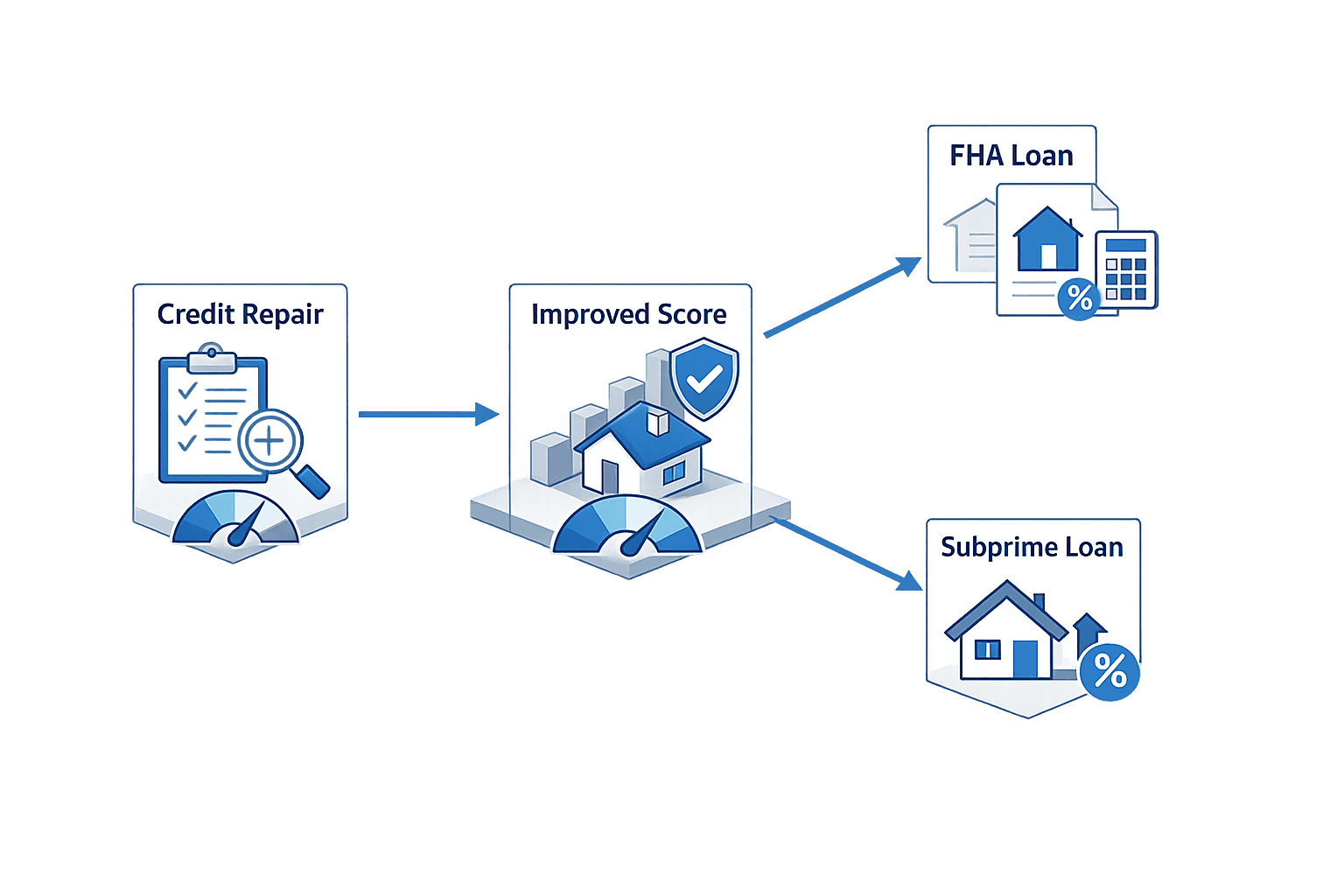
Buying a house with bad credit is challenging but far from impossible. The path forward requires a combination of credit repair, strategic financial planning, and understanding which loan programs accept lower scores. Below are concrete steps to improve your approval odds and position yourself for homeownership.
Review and Dispute Credit Report Errors
Start by carefully reviewing your credit report from all three major credit reporting agencies. Incorrect information—whether it's a payment marked late that you made on time or an account that doesn't belong to you—can drag down your score unfairly. Dispute any inaccurate or missing information by contacting the credit reporting agency and your lender directly. Fixing errors won't produce overnight results, but it's the fastest way to remove undeserved damage from your credit profile.
Build Financial Discipline Before You Apply
If you're planning to take out a mortgage, practice setting aside the equivalent monthly payment in advance. This builds financial discipline and prepares you for the responsibility of homeownership. It also demonstrates to lenders that you can handle the obligation, even if your past credit history is imperfect.
Repairing bad credit or building credit for the first time takes patience and discipline—there is no quick way to fix a credit score.
Understand the Risks of Consolidation Loans
Some borrowers consider debt consolidation loans to simplify payments and potentially lower interest rates. However, many consolidation loans require you to put up your home as collateral. If you can't make the payments—or if your payments are late—you could lose your home. Most consolidation loans also carry costs beyond interest, including points (one point equals one percent of the amount you borrow). Calculate whether the consolidation will genuinely improve your financial position before committing.
Research Lenders Thoroughly
Before signing with any lender or loan servicer, search online for the company's name along with terms like "complaint" or "review." Read what other borrowers have experienced. Also check with your state attorney general and local consumer protection agency to verify the company's standing. Predatory lenders often target borrowers with poor credit, so due diligence is essential.
Tips and Tricks for Buying a House with Bad Credit
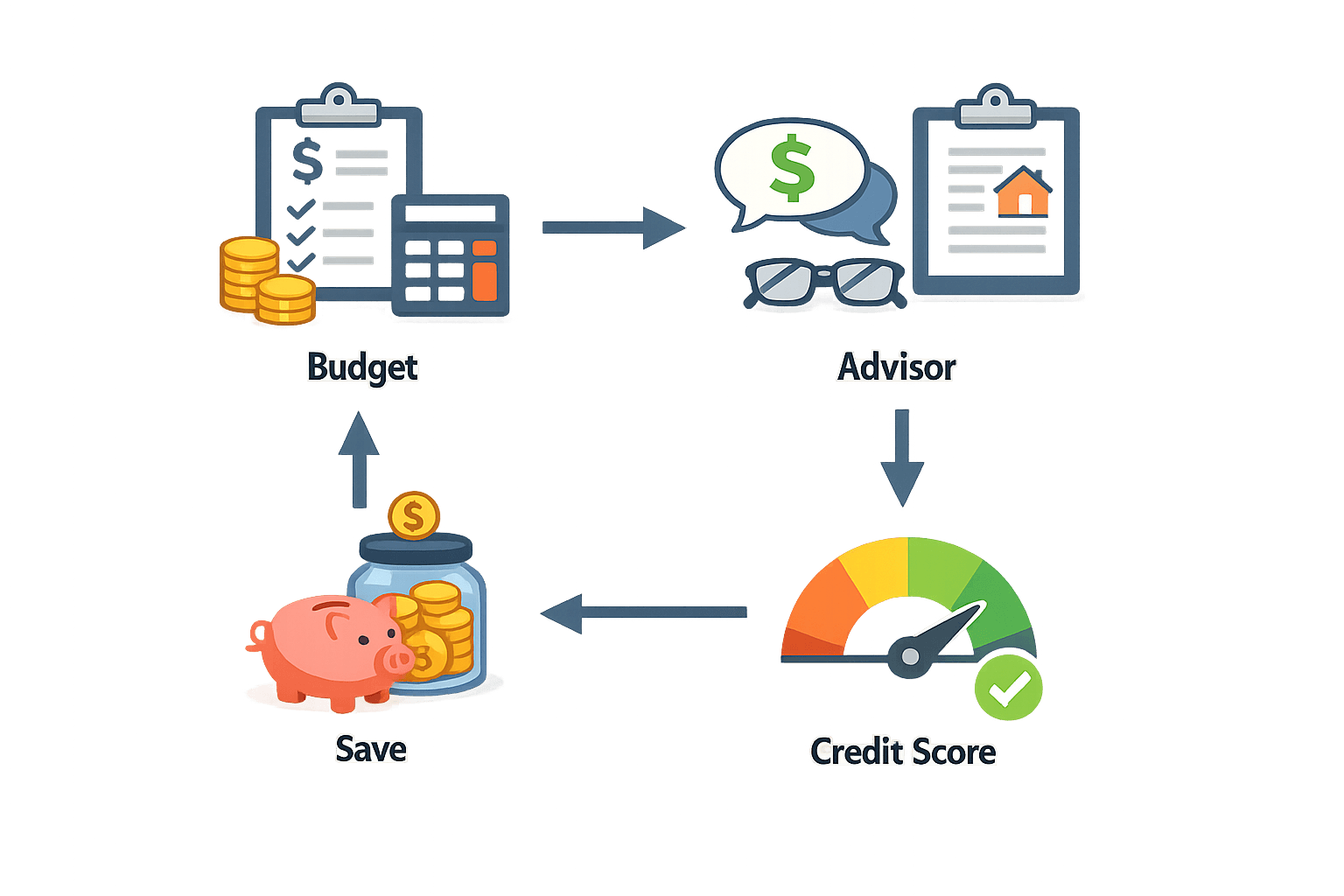
Navigating the home buying process with poor credit requires strategy and patience. While the path may be longer, focusing on the right tactics can strengthen your application and improve your chances of approval.
Build a Pattern of On-Time Payments
The most powerful way to offset past credit problems is to establish a consistent track record of timely payments. The impact of previous late payments or defaults diminishes over time as you demonstrate recent responsible behavior. Even if you've had serious credit issues, the longer you pay bills on time, the more your score should improve.
This principle applies to all credit obligations: credit cards, auto loans, student loans, and utilities. Lenders reviewing your application will look at recent payment history more favorably than older issues, so every month of clean payments strengthens your case.
Review and Dispute Credit Report Errors
Before applying for a mortgage, carefully review your credit reports from all three major credit bureaus for incorrect information. Errors can artificially lower your score and hurt your approval odds. Common mistakes include accounts that don't belong to you, incorrect payment statuses, or outdated negative items.
If you find inaccuracies, dispute them by contacting both the credit reporting agency and your lender. Correcting these errors won't produce overnight results, but it's a critical step in ensuring your credit profile accurately reflects your financial behavior.
Research Lenders and Loan Programs Thoroughly
Not all lenders evaluate bad credit the same way, and some specialize in working with borrowers who have credit challenges. When determining the material terms offered to a consumer, lenders may use the lowest credit score obtained from multiple agencies, so understanding how different lenders assess risk can help you target the right ones.
To learn more about companies offering loans, search online for the company's name along with "complaint" or "review" to gauge their reputation.
Before committing to any lender, verify their track record. Check with your state attorney general and local consumer protection agency to confirm the lender's legitimacy. This research protects you from predatory terms and ensures you're working with a reputable institution.
For a comprehensive look at which lenders are most likely to approve your application, see our guide on Low Credit Score Mortgages: What Lenders Will Approve.
Work with Nonprofit Housing Counselors
If you're struggling to navigate the process or manage your debt, consider working with a nonprofit housing counseling organization. These agencies offer free or low-cost services including budgeting guidance, debt management plans, and mortgage preparation support.
A good credit counselor will spend time understanding your complete financial picture and help you create a realistic plan. Interview multiple counselors before committing, and be wary of anyone who promises quick fixes or charges fees upfront. Just because an organization is nonprofit doesn't guarantee its services are free or affordable, so ask about costs before you begin.
Avoid Quick-Fix Credit Repair Schemes
Repairing bad credit or building credit for the first time takes patience and discipline. There is no quick way to improve a credit score, and quick-fix efforts are the most likely to backfire. Be skeptical of any service that claims to rapidly boost your score or remove accurate negative information from your report.
Legitimate credit improvement happens through consistent responsible behavior: paying bills on time, keeping credit utilization low, and avoiding new negative marks. If you're working with a credit counseling service, note that seeking assistance will not hurt your score.
Prepare Your Finances Before Applying
Before you submit a mortgage application, practice financial discipline by setting aside money equivalent to your expected monthly payment. This builds the habit of budgeting for homeownership and demonstrates to yourself that you can handle the obligation.
Additionally, save as much as possible for a down payment and closing costs. A larger down payment reduces the lender's risk and may help offset concerns about your credit history. It also lowers your loan amount, which can make approval more likely and reduce your monthly payment burden.
Conclusion
Buying a house with bad credit is challenging, but it's far from impossible. Throughout this guide, we've explored the loan programs that accept lower credit scores, the practical steps you can take to strengthen your application, and the strategies that help you navigate the approval process even when your credit history isn't perfect. The key takeaway is simple: bad credit doesn't disqualify you from homeownership—it just requires a more deliberate approach.
The most important action you can take is to focus on making timely payments going forward. The longer you pay your bills on time after being late, the more your FICO Score should increase, and lenders will see evidence of improved financial responsibility. While past credit problems will remain on your report for years, their impact fades as you build a consistent pattern of on-time payments. This isn't a quick fix, but it's the most reliable path to better loan terms and more lender options.
Don't let a low credit score stop you from exploring your options. Start by reviewing your credit report for errors, connecting with lenders who specialize in government-backed loans, and taking small, consistent steps to improve your payment history. Homeownership may be closer than you think—especially if you're willing to be patient, strategic, and persistent in managing your credit responsibly over time.
Learn how to buy a house with bad credit and discover the steps you can take to improve your chances of homeownership.
Table of Contents
- Introduction — Introduce the topic of buying a house with bad credit and set the stage for the discussion.
- Problem Statement — Highlight the challenges faced by potential homebuyers with bad credit, including higher interest rates and loan denial.
- Solution Steps to Buy a House with Bad Credit — Provide actionable steps and options for those with bad credit to improve their chances of buying a house.
- Tips and Tricks for Buying a House with Bad Credit — Offer practical tips and tricks that can help navigate the home buying process with poor credit.
- Conclusion — Summarize the key points discussed and encourage readers to explore their options despite having bad credit.
- Table of Contents